

In our inaugural series, “Transforming the Customer Experience“, we delve into the remarkable journey of 3-1-1, the revolutionary system that changed how the public interacts with their local governments. From its origins in Baltimore to its global adoption, explore how 3-1-1 has empowered residents, urban techies, bureaucrats, and government relations professionals. Discover the evolution of this indispensable tool, from phone calls to AI-driven automation.
Can you imagine a time when we had to navigate through endless bureaucracy and multiple phone numbers just to access basic government services? Have you ever tried navigating your own City’s website? You would probably have better luck finding a needle in a haystack. Enter the revolutionary concept of 3-1-1, an initiative that completely transformed the customer experience when interacting with government agencies.
To kick off our first series, “Transforming the Customer Experience“, we take a stroll down memory lane and explore the origins of 3-1-1.
🤓 Fun fact: There was an American rock band from Omaha, Nebraska called 311 (pronounced "three eleven"). The band was formed in 1988.
🛠️ The Tool: 3-1-1
⚙️ The Tech: A telephone number that’s a single point of contact to access municipal services.
📍 The Birth of 3-1-1: The journey began in Baltimore, Maryland, which became the first city to introduce 3-1-1 back in 1996. This novel approach aimed to consolidate access to non-emergency government services under one easily rememberable number, transcending traditional channels and simplifying residents' lives.
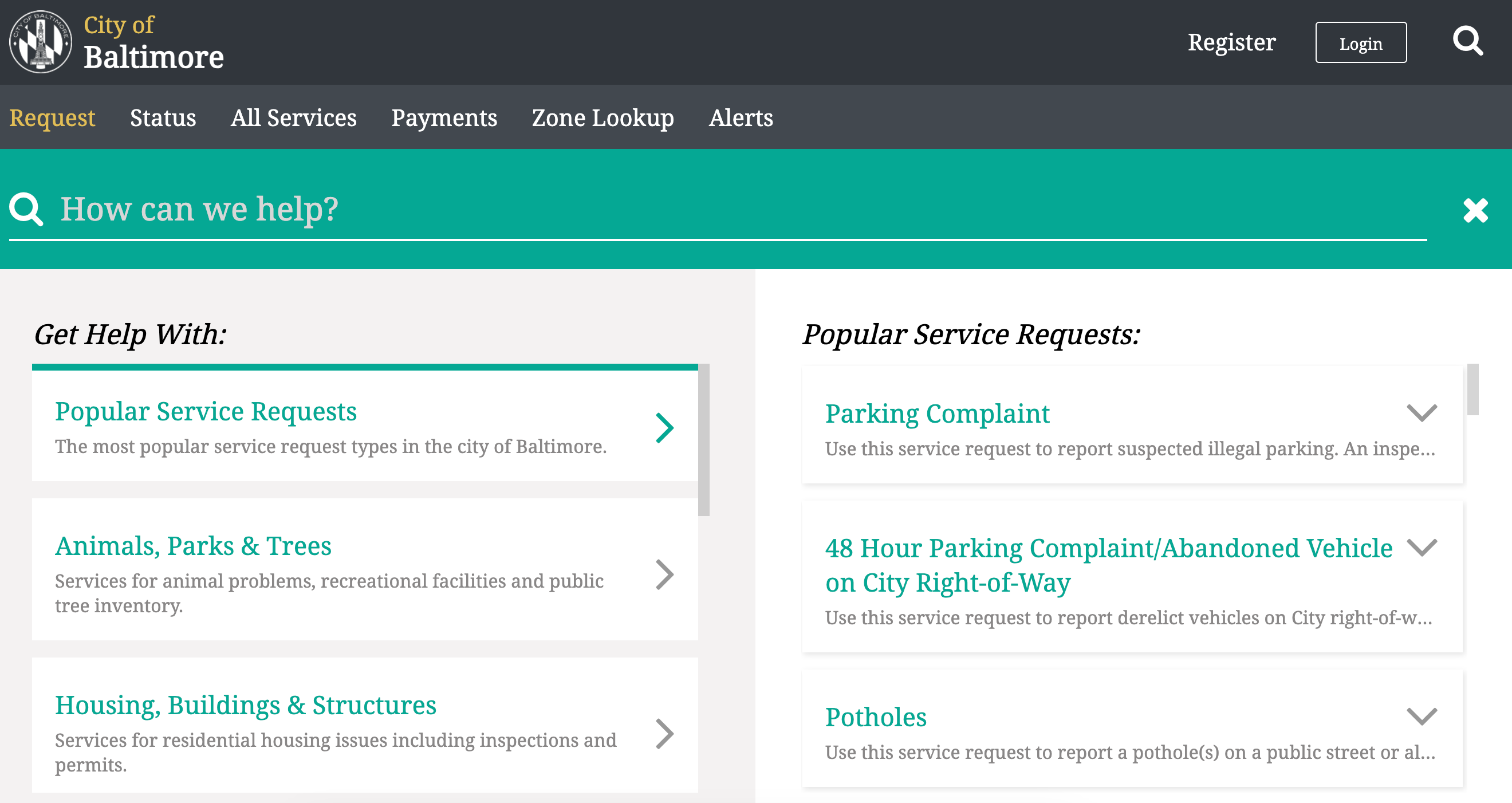
🌍 Global Reach: Today, the impact of 3-1-1 stretches far and wide. Over 150 cities worldwide have successfully implemented their own versions of the 3-1-1 system, each tailored to local needs and requirements. From New York City to Houston, Toronto to Tokyo, this transformative concept has undoubtedly stood the test of time and geography.
💡 Features & Benefits: At its core, the 3-1-1 system boasts a range of robust features that redefine government-customer interactions. The public can get quick responses to non-emergency queries, report issues such as potholes or noise complaints, and access vital information about various services, all through a single centralized platform. This streamlined approach not only saves the public valuable time but also empowers local governments to identify and address public concerns promptly.
🌟 Driving Positive Change: The evolution of 3-1-1 hasn't stopped. Today, innovative cities are leveraging digital technologies to enhance the system further. Mobile applications, chatbots, and enhanced data analytics are transforming service delivery, making it even more accessible, efficient, and public-centric.
§ The Take-Away: The remarkable evolution of 3-1-1 has brought a monumental improvement to government-customer interactions worldwide. From its humble beginnings in Baltimore to its global significance today, 3-1-1 has improved the accessibility, transparency, and quality of services provided by governments.
Let's take that spirit and continue pushing boundaries by embracing newer technologies to create a future where public services and the public’s experience remain at the heart of local governments.
Thank you for reading The Municipal Codist.
This post is public, so feel free to share it.