

In our inaugural series, “Transforming the Customer Experience“, we delve into the remarkable journey of 3-1-1, the revolutionary system that changed how the public interacts with their local governments. From its origins in Baltimore to its global adoption, you’ll learn how 3-1-1 has empowered residents, urban techies, bureaucrats, and government relations professionals. Discover the evolution of this indispensable tool, from phone calls to AI-driven automation.
In the 2020s, cities across North America are constantly looking for ways to improve the public’s customer experience. The 3-1-1 service has become as one of the key ways to accomplish this. A consolidated phone line, 3-1-1 innovatively allows the public to easily report non-emergency issues, suggest improvements, or seek relevant information. In this article, we’ll explore the range and breadth of 3-1-1 services in various North American cities, shedding light on the software used, mobile applications available, common complaints, and interesting facts about each city's implementation.
3-1-1 continues to innovate and evolve beyond just being a phone service: in the age of smartphones and instant communication, cities across North America are starting to transform their customer service experiences by adopting mobile apps for their 3-1-1 services. Let's explore the features of these apps.
As technology advances, the need for adaptation becomes evident. The shift from website and phone-based 3-1-1 services to mobile apps is increasingly important. Mobile apps offer convenience and accessibility.
Several features are commonly found in 3-1-1 apps across different cities. Users can report issues, attach photos, and mark the exact location on a map. These fundamental features enhance the accuracy and efficiency of service delivery.
And while these common basic features exist in virtually all of the 3-1-1 apps, some cities have gone above and beyond to include some standout features.
🌟 Standout Features
Baltimore, New York, Ottawa, and Vancouver offer account creation, real-time updates, and request tracking, improving transparency and empowering users.
Baltimore, San Francisco, Toronto, and Vancouver allow anonymous viewing of service requests submitted by others on a map, fostering community engagement.
New York and Ottawa's apps serve as communications tools, delivering important news and notices to residents.
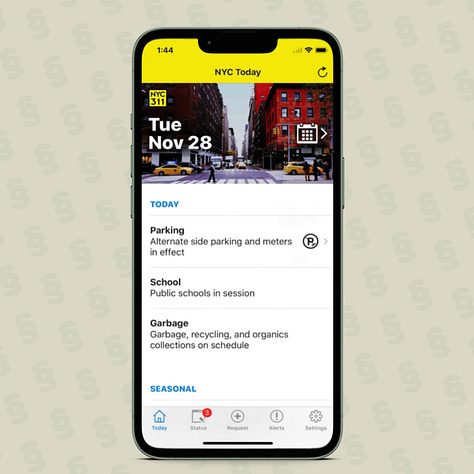
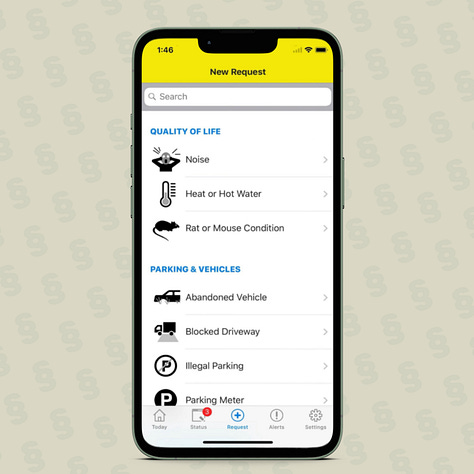
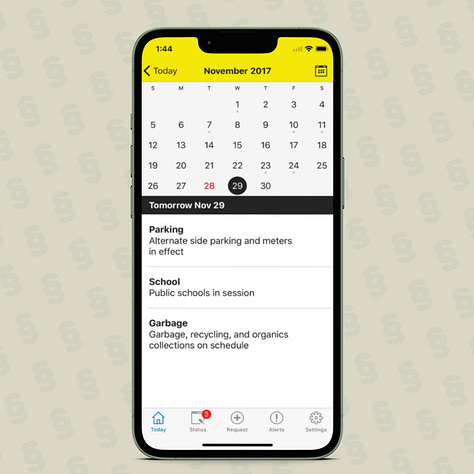
Source: Apple App Store Toronto is the only city that provides a live chat feature during business hours, offering direct interaction between residents and service agents.
Vancouver goes the extra mile by integrating their 3-1-1 service with their Open Data portal, providing the public access to valuable service request data, and promoting transparency.


However, despite having an account, Vancouverites report having to re-enter their contact information for every single request. Talk about a hassle!
Which is a great segway into our next point of discussion…
🎨 Design and User-Friendly Interface: Key to Adoption and Satisfaction


User adoption and satisfaction heavily depend on design and user-friendly interfaces. Baltimore's app, despite being a pioneer, lacks sophistication.


Ottawa's interface, while an improvement from Baltimore’s, still leaves room for enhancement.


New York and Toronto boast polished interfaces but can further refine their icon selection.
The Toronto 3-1-1 mobile app is a solid contender in the world of city service applications. While it may not be the gold medalist, it certainly lands a well-deserved bronze, thanks to its thoughtful user interface design and organized layout.
When it comes to user experience, easy navigation is key, and Toronto 3-1-1 delivers. The app and website are neatly organized, making it fairly easy to find what you need (unless you’re reporting graffiti in a park - because the Parks Department is not yet integrated - oops 🙊).
However, the app lacks a feature to track past service requests or stay up-to-date with general city news. Hopefully, they will consider adding these missing pieces in future updates. Having a convenient one-stop shop for city news and services, like New York and San Francisco do, is extremely valuable.
Enter San Francisco’s 3-1-1 mobile app which sets the gold standard for user-friendly design and functionality in city service applications. It's super easy to navigate, and you'll be gliding through the app like a smooth operator.


Before you dive right in, let's address the elephant in the room: the app's rating. Currently, it's a not-so-impressive 1.7 out of 5 stars on the Apple Store. But hold your horses, let's put this into perspective. We all know people are more likely to unleash their frustrations online rather than showering praise. So, take those negative ratings with a pinch of salt. Most of them aren't even about the app itself. Instead, they revolve around service delivery and follow-up, which can be attributed to limitations in the software integrations internally or may not be related to the app's technology at all. We will delve deeper into uncovering the root causes of these issues and explore potential solutions later in the series.
§ The Take Away
While this article has focused on a few major cities, it is important to note that over 150 other North American cities have also implemented a 3-1-1 service.
In our exploration of the 3-1-1 service across North America, we have seen the potential for governments to revolutionize the customer experience. However, success is not solely dependent on the technology itself. Governments must have the right people, funding, and resources to truly excel in delivering exceptional service.
Because 3-1-1 serves the same function across municipalities, there is an opportunity for collaboration and resource-sharing. Municipalities within the same jurisdiction could join forces and share resources, particularly in development costs. Larger municipalities might consider entering cost-share agreements with smaller ones, enabling the benefits of economies of scale. Although operational and server maintenance costs will vary and, therefore, would need to remain separate, exploring collaboration in development can be a significant step forward.
To improve the customer experience with services like 3-1-1, here are some tangible steps municipalities can take:
Host Focus Groups and Create Advisory Committees: Engaging the public through focus groups and customer experience advisory committees can provide valuable insights and ensure services align with their needs and expectations. (Councillors love advisory committees 😉)
Beta Testing with City Staff and Councillors: Creating a dedicated group of beta testers, comprising city staff, councillor office personnel, and city councillors themselves, allows for comprehensive feedback and refinement before launching new apps or app versions.
Leverage User Feedback: Providing in-app feedback mechanisms allows users to share their experiences and suggestions directly. Listening to and acting upon user feedback is essential for continuous improvement.
Public-Facing Roadmap and User-Driven Prioritization: Developing a public-facing roadmap highlighting upcoming features fosters transparency. Additionally, allowing users to submit and vote on prioritized features creates a sense of ownership and strengthens adoption and engagement.
Implement AI Functionality: Implementing intelligent chatbots can revolutionize the way residents interact with the 3-1-1 service. These AI-powered virtual assistants can handle a wide range of inquiries and requests, providing instant responses and guidance. Whether it's answering frequently asked questions, assisting with service requests, or providing information about city programs, chatbots can handle high-volume, repetitive tasks and free up human resources for more complex issues.
By implementing these strategies, municipalities can enhance the customer experience, ensuring that 3-1-1 services meet the evolving needs of the public.
⏭️ Next up: we take a bit of a break from 3-1-1 and begin exploring other tech tools that are revolutionizing service delivery, access, transparency, and governance in municipalities.
Thank you for reading The Municipal Codist.
This post is public, so feel free to share it.